Data center construction costs soar 13% in 2026

A version of this article first appeared in the CNBC Property Play newsletter with Diana Olick. Property Play covers new and evolving opportunities for the real estate investor, from individuals to venture capitalists, private equity funds, family offices, institutional investors and large public companies. Sign up to receive future editions, straight to your inbox.
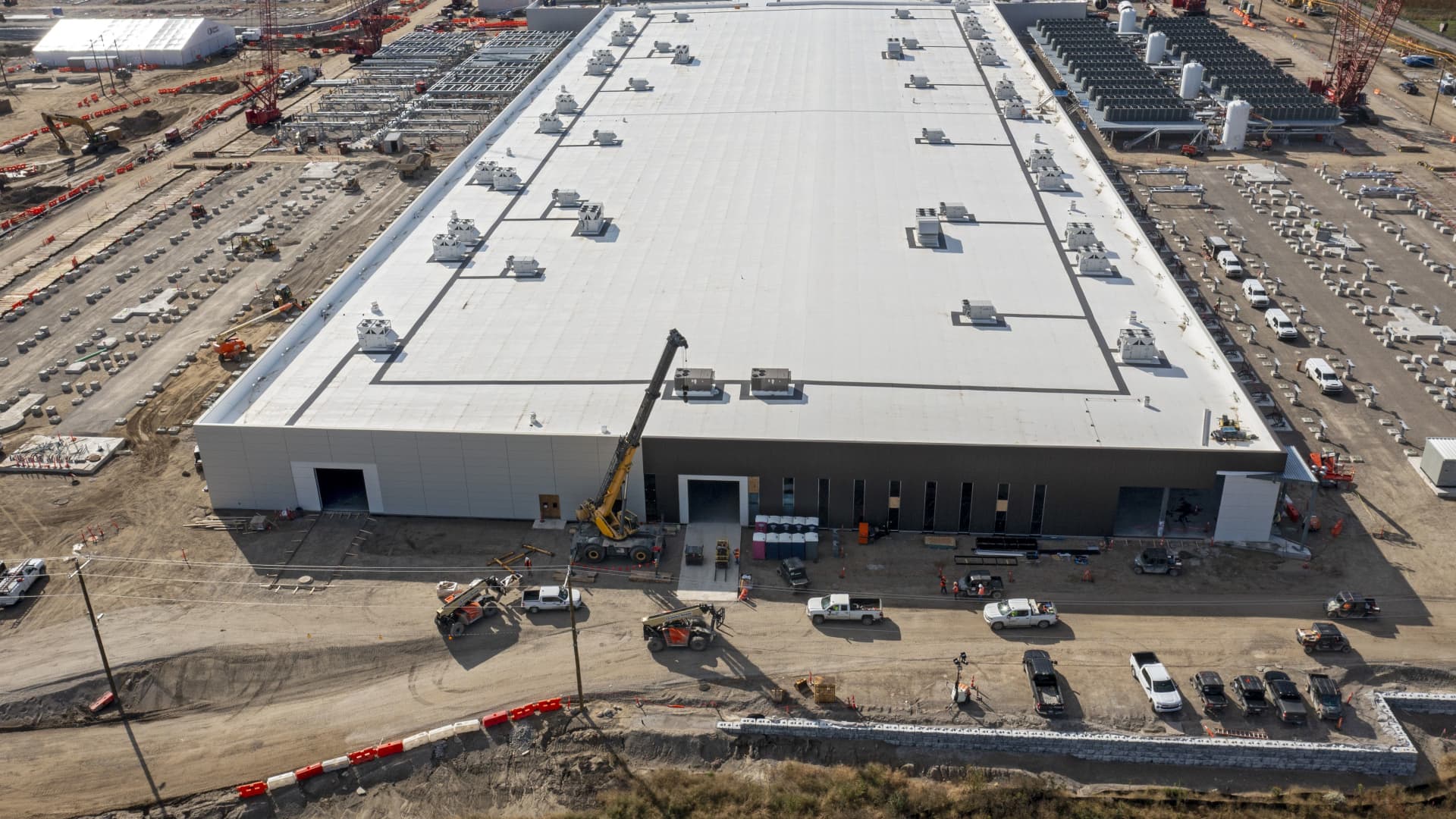
The demand for large-scale data centers in the U.S. this year, driven by the need for computing power for artificial intelligence, grew well beyond the supply of powered land and the labor to build these structures. It also pushed timelines and risk for contractors.
All that resulted in costs rising 13% year-over-year to more than twice the global rate, according to a new report from Turner & Townsend, a global project management company. The gain this year was about three times the last ten-year average.
The report looked at over 500 live or recently completed projects in 62 global markets. It also included a survey of 400 experts in the global data center industry.
While there was some stabilization in cost inflation this year, it was not enough to offset the huge growth in not just demand but speed of construction and delivery.
“More aggressive schedules tie to contractors in particular and subcontractors baking in more risk allowances in their pricing,” said Paul Barry, North America data center lead for Turner & Townsend. “So whether that’s acceleration allowances, whether that’s more overtime and labor attraction allowances, even just higher fees for taking on the risk of delivering at a faster pace than what they would traditionally take on.”
All of those things, combined with the spike in demand and the strain on the supply chain, translate into higher costs, he added.
Capital expenditure on global data centers is projected to rise from about $800 billion this year to $1.8 trillion per year in 2050, according to a recent report from PwC. The U.S. is expected to capture almost half of all global investment in AI infrastructure, which includes both data centers and chips.
Power is, of course, key to all data centers, and 56% of those surveyed by Turner & Townsend globally said it was a major obstacle to delivery. Just over half said utility connections typically take between one and two years, and almost a third reported timeframes of over two years. Costs for power vary regionally — from $15.01 per watt in Silicon Valley to $10.51 per watt in Dallas, based on a typical 60-megawatt design.
As with every type of construction in the U.S., labor continues to be a significant headwind. Just over one quarter of respondents said their contractor capacity, that is, the ability to manage construction backlogs, was sufficient.
Going forward, Barry said he expects costs to moderate somewhat, with cost increases in the 6% to 10% range in the next year. A lot of the major projects have already started or are starting now, so cost risk has been baked into those contracts.
“If this demand continues, then there’ll be more continued flow of project starts and so on, but I think we’ve hit a big surge in 2026, especially of new big major projects that have been procured,” said Barry.